Ellie Doolittle:
Sustainability
Proposal Paper
5/3/19
Senior Project
My interest in furniture as a whole, lay in the ability for it to provide people with an outlet for self expression and self identification in their home. Furniture serves similarly as fashion where people form a connection with objects, and identify with them on a personal level. People, are willing to buy what they have a personal connection to, and what they think fits with the way they identify themselves. Furniture acts as a representative of the individual, a way to live in an environment that best compliments the ideology and aesthetic of an individual. Furniture should understand the constantly adjusting trends and community, so that people will always be able to furnish their homes with accessories that relate to them on a personal level.
My current concerns in furniture production are the inability for the average middle class/ lower-middle class person to own furniture that won't fail them due to planned obsolescence or poor quality of material. The average person should be able to afford good quality furniture at a reasonable price. Another concern is the lack of consideration from manufacturers lack of awareness toward towards materials impact on environment. With cheaper furniture being produced there is a large increase of waste that ends up in landfills. To decrease this we need to make longer lasting furniture that when its lifespan is eventually over will have a smaller environmental footprint, such as materials being sustainably sourced, and plans for recycling, reuse and repurposed. Another concern is our waste culture from constantly changing aesthetics. We mass produce cheap accessories and furniture changing the common trends making people want to keep replacing their home goods even before they have reached their lifespan, in order to decorate their home to their new aesthetic requirements. We need furniture that will impact its owners in order to last longer in a person's home.
Furniture design needs to enforce an awareness in affordable living along with material and environmental sustainability, as well as an analysis on the impact of current cultural aesthetics.
The urge to have your home express your best self is commonplace, and often time the furniture and home accessories that do it the best and will last the owner the longest will cost a much larger amount of money. This is a poor standard for all consumers. While cheaper furniture retailers provide customers with the opportunity to decorate their home for their aesthetic style, and current trends, many times these places have a planned obsolescence to their materials and consumers have to replace their furniture at a much higher rate. This constant replacement of furniture ends up causing these people to spend more money in the long run than they would if they were to save for a more resourceful piece of furniture. In order to address the concerns of affordability designers need to inform the common consumers as to why objects are priced the way they are. Education is the key to understanding, and it also makes it so that companies cannot hide their costs and profits from their consumers. This will help consumers find companies that create affordable and durable furniture to the best of their price range. Ways to introduce costs to consumers would be explanation on price of material and reasons/benefits of materials used. Then if there is a way to universally explain manufacture fees and retail fees, along with artists portion, people might be more understanding as to why objects are priced the way they are and be more willing to save for a better piece of furniture.
Although, a lot of furnichure purchases come with a guarantee of spending a large sum of money, it is unfortunate that many pieces of furniture are so highly priced that the average U.S. citizen would hardly be able to afford a new couch over the frame of a year. According to the government census only 40% of married people, and 20% of unmarried people earn 40k or more a year. And as of 2006 the average person is $63,000 in debt, and the average Bachelor graduate is $100,000 in debt. According to the Minneapolis department of numbers the average U.S. income is $32,397 per capita, and $39,696 per capita in Minneapolis.
In 2017 the average U.S. cost expenditures averaged a total of $57,807, totalling more than the average income, $19,884 of that being housing, and $2,010 of that falls into “other expenditures”, where furniture would fall into.
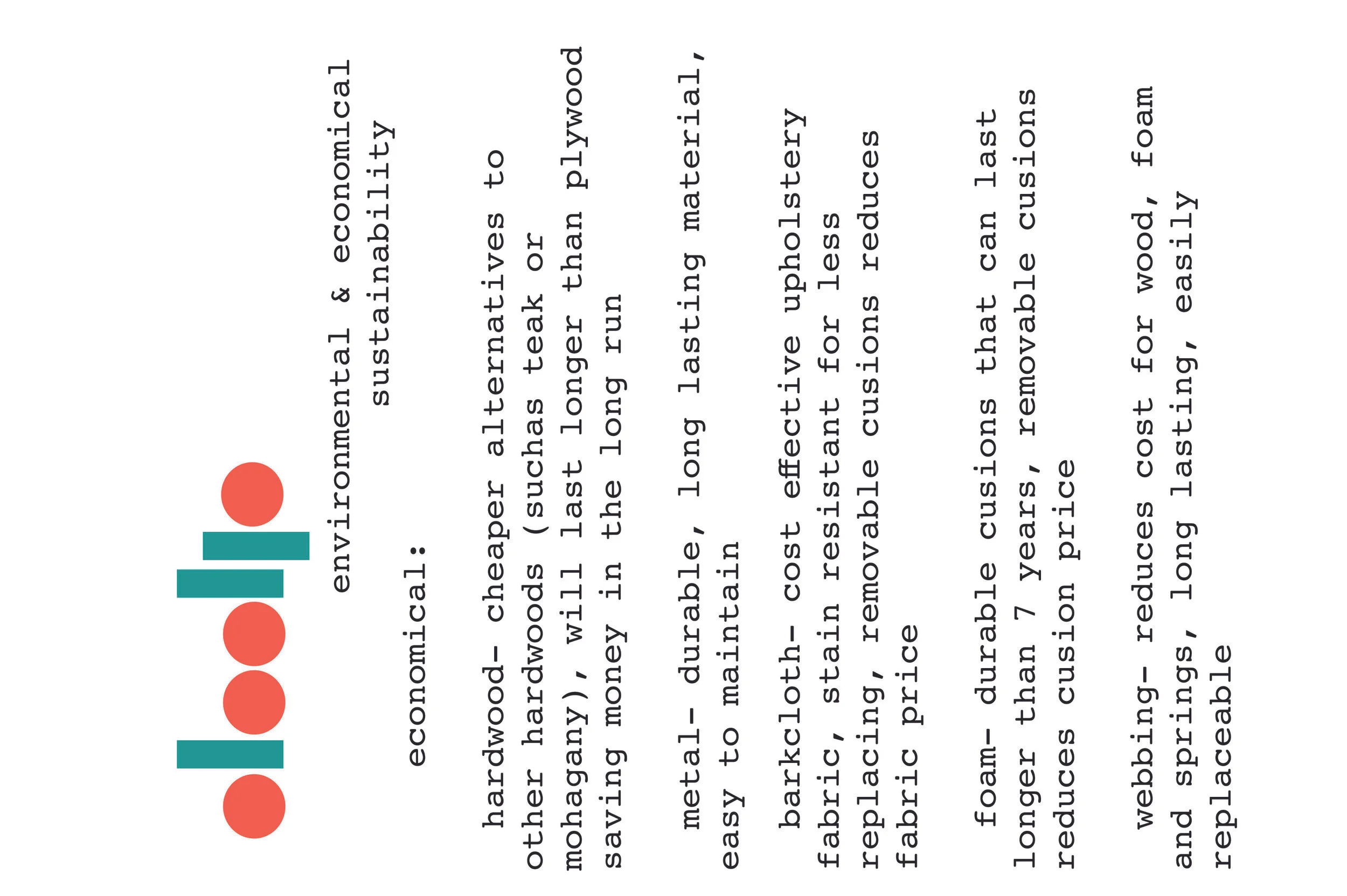
A single person living in Hennepin county with no children has average expenses that total $32,448- housing totaling $10,320, furniture falling into the “other” category totaling $4,440. If we consider how much money is left in the other categories from these statistics, and recognize that this category has many separate uses, it’s hard to dedicate a large sum of that money to furniture. When you look at Ikea for example, the average price for a couch is $2,458. Ikea furniture is some of the most affordable prices available, all their couches cost around this price point or less. If we look at CB2, they average $2,060 for couches, but they don’t offer much below this price point and can vary between <1000 and >6000. If we look at this we can see that for just the price of a couch the average person is spending around half of there “Other” expenditures for the year on a single item of furniture alone. With this information we can understand why people are so hesitant to save up to by a more expensive piece of furniture when a cheaper, and perhaps equally as beautiful piece made in worse quality might suite them nearly as well. This is why I develop my work. The couch that I am creating is made from solid Oak, a hard wood that is durable and will last a person a long time. The oak for this couch costs around $500. The cushions are removable so they can serve multi-purpose- such as floor pillows, and also so they can be machined washed. An american made fabric is used for the cushions and if the consumers style changes, instead of getting a whole new couch it is much more affordable to reupholster the cushions. The couch requires approximately 5 yards of Barkcloth Fabric which I sourced from Revolution Performance Fabrics at about $35 a yard, totaling about $175. The cushion interiors are made from a affordable foam and made to last for many years before replacing. This information is so that consumers will know why they are investing their money in quality material and products.
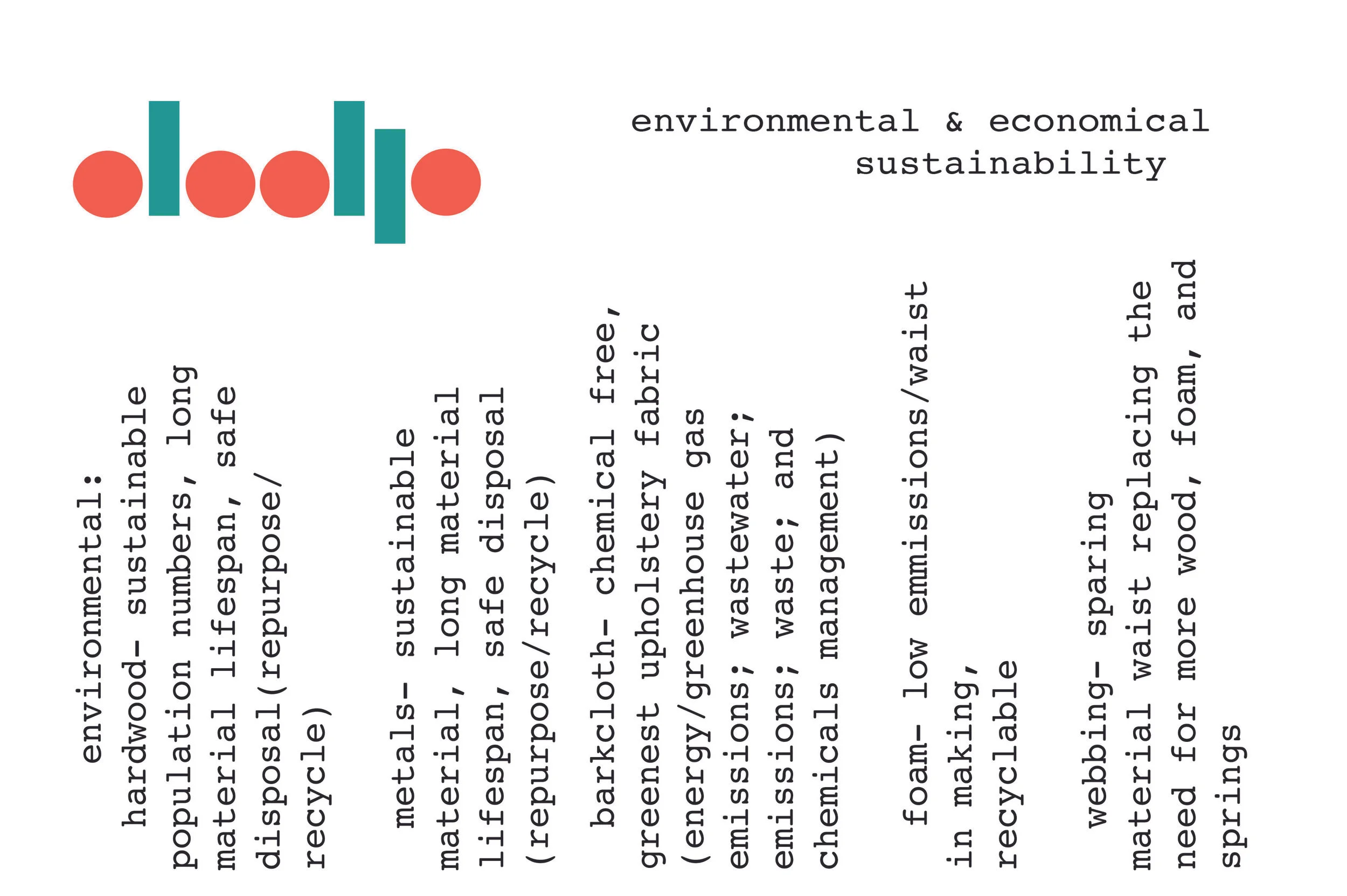
When considering sustainability we must consider the waste culture and fast fashion convincing people to replace their homegoods to suite the adjusting trends. A way to fight this is to create furniture that has an inclusive style, that fits multiple aesthetics so more people will find a connection to it. An equally important aspect to sustainability is material usage. The consideration as to what material will best serve the purpose of the furniture, what material will last the longest, and what materials will least likely leave a harmful footprint when eventually disposed of. As of 2006 the average lifespan for a sofa is about 7.6 years so manufacturers need to consider and create with materials that will match this life span, or if not, consider what may need to be replaced and how to easily and affordably make that possible. So manufacturers need to consider individual material lifespan. If produced and taken care of properly certain woods can last over 100 years. We can look at woods like soft maple which is not very durable, especially over a period of time, and can be insect prone but reasonably affordable and compare it to mahogany which is moderately durable, still great for furniture, not too expensive, but is being sourced too frequently to the point that it has become vulnerable in its population numbers. Teak is great for durability and environmental impact but very expensive. Oak is a good consideration, being very durable and moderately priced and not harming its population numbers through harvesting. Fabric has a lot a variability from material to weave, durability and cost. Linen can be great because it is eco friendly (biodegradable) it is a managed resource, and easy to clean, not always as durable, but very reasonably priced. Cotton can be very durable especially with a heavier weave but can be more expensive.
Furniture production has expanded to such an extent that we now have a constantly changing aesthetic environment and a culture that is never satisfied with their belongings. A problem produced through the urge to express oneself through furniture is that because we as individuals are always changing, and as the world around us is always changing, we don't often have belongings that change with us. A solution to this is to create furniture that people are more likely to create a lasting bond with so that when they develop their tastes, their belongings grow with them and they develop a connection to their belongings. And when it comes time for a person to dispose of their belongings they will either try to get it recrafted in order to continue to hold on to that belonging, try to find it a new home so that it is still in the world, or if that piece of furniture has finally reached its limit and needs to be thrown away, it should be able to be disposed of with less effects on the world and pollution.
Some companies have already started taking off with this idea such as Ecobalanza and Environment Furniture. Companies like this are able to work with personal aesthetics and material choices by providing a stand alone piece of furniture that can be slightly modified for each customer. Because of this they do not provide price points until the customer calls and communicates their needs. Revolution Performance Fabrics also considers this in the upholstery grade fabric. All fabrics are chemical free, durable, machine washable, and American made.
Countering fast trends is about providing something to consumers that they are proud to own, and will want to keep in their home for a long time. As well as providing an outlet for self expression through furniture. Providing a way for people to create a comfortable environment for themselves.
Furniture design needs to enforce an awareness in affordable living along with material and environmental sustainability, as well as an analysis on the impact of current cultural aesthetics. Affordability comes down to an understanding from consumers as to why they should save for a piece of furniture. Sustainability does not just mean environmentally but also economically. We can protect our future purchase but acquiring furniture that will last us, but through our identity and comfort placed on the object but also by purchasing furniture that will live a long life in your home. People are more willing to spend money on object worthy of their price, and if we consider sustainability to not only mean environmental footprint but durability in creation, and economical sustainability than furniture can last people a lifetime making price more worth the value. If this is achieved then waste culture could become obsolete In the meantime it is still important to understand fast trends and that with fast trends becomes an inordinate amount of waste. Businesses and consumers need to fight this by putting value in objects that are sustainable, and by valuing object that speak to them personally rather than on a surface level following cultural aesthetic trends. In the end, furniture should have meaning in a person's home. Awareness of one's personal objects will bring them closer to them and create a lasting bond that will make furniture an outlet for self expression in one's home. Furniture is meant for much more than just fast trends, it is meant to make an impact in a home, but not in a wallet, or on the earth.
Bibliography:
Books:
Bovea, Marı́a D., and Rosario Vidal. "Materials Selection for Sustainable Product Design: A Case Study of Wood Based Furniture Eco-design." Materials & Design 25, no. 2 (2004): 111-16. doi:10.1016/j.matdes.2003.09.018.
Fabbro, Mario Dal. Upholstered Furniture; Design and Construction. New York: McGraw-Hill, 1969..
Proctor, Rebecca. 1000 New Eco Designs and Where to Find Them. London: Laurence King, 2009
Schleining, Lon. The Complete Manual of Wood Bending: Milled, Laminated, and Steam-bent Work. Fresno, CA: Linden, 2002.
Websites:
"Average Annual Consumer Spending in the U.S. 2017, by Type | Statistic." Statista. Accessed March 24, 2019. https://www.statista.com/statistics/247407/average-annual-consumer-spending-in-the-us-by-type/.
"Cost of Living in Minnesota." Minnesota Department of Employment and Economic Development. March 01, 2019. Accessed March 24, 2019. https://mn.gov/deed/data/data-tools/col/.
"Ecobalanza." Ecobalanza. Accessed March 24, 2019. https://www.ecobalanza.com/.
"Minneapolis-St Paul-Bloomington Minnesota Household Income." Department of Numbers. Accessed March 24, 2019. https://www.deptofnumbers.com/income/minnesota/minneapolis/.
Revolution Fabrics by the Yard. "Performance Stain-Resistance Upholstery Fabrics | Revolution Fabric." Revolution Fabrics by the Yard. Accessed March 24, 2019. \https://www.revolutionfabricsbytheyard.com/.
"Safia Sofa." Environment. Accessed March 24, 2019. https://environmentfurniture.com/detail/safia-sofa.
US Census Bureau. "Wealth, Asset Ownership, & Debt of Households Detailed Tables: 2014." Wealth, Asset Ownership, & Debt of Households Detailed Tables: 2014. September 17, 2018. Accessed March 24, 2019. https://www.census.gov/data/tables/2014/demo/wealth/wealth-asset-ownership.html.